






Generating Evidence While Doing Business: Lessons from Corporate-Led MSME Interventions
Watch the recording here:
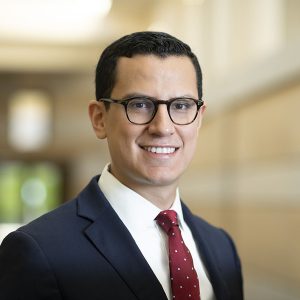
Presented by Alejandro Estefan
University of Notre Dame
Organized by the Private Sector Development Research Network
hosted by the IDB Invest
moderated by Patricia Yanez-Pagans (IDB Invest)
Friday, 4th of May 2026, from 9-10am EST
Click here to join virtually the day of the seminar
ABOUT THE SEMINAR
This seminar presents lessons from a research partnership between IDB Invest and a multinational corporate client that implemented—and allowed rigorous evaluation of—two large-scale initiatives for micro-entrepreneurs operating franchise stores in Guatemala: a digitally delivered business training program bundled with one-on-one consulting, and the rollout of security cameras in high-crime environments. Leveraging unusually rich administrative sales and operational data within a standardized business setting, the talk highlights how collaboration with corporate clients can enable credible impact evaluation while remaining closely aligned with business objectives. The findings point to important design and targeting considerations: digital training can improve practices and performance when paired with human support, with impacts concentrated among established female-owned firms, while security investments primarily affect firm survival and competitive dynamics rather than short-run sales. The seminar concludes with broader takeaways on how DFIs, researchers, and firms can jointly generate actionable evidence that informs both development impact and operational decision-making.
ABOUT THE SPEAKER
Alejandro Estefan, University of Notre Dame
Alejandro Estefan is an Assistant Professor of Development Economics at the University of Notre Dame’s Keough School of Global Affairs. His research explores private sector development through technological adoption, labor market regulation, and women’s economic inclusion in developing economies. He collaborates with development finance institutions, governments, and corporations across Latin America to evaluate policies using applied microeconometric methods. He holds a Ph.D. in Economics from University College London (UCL).