





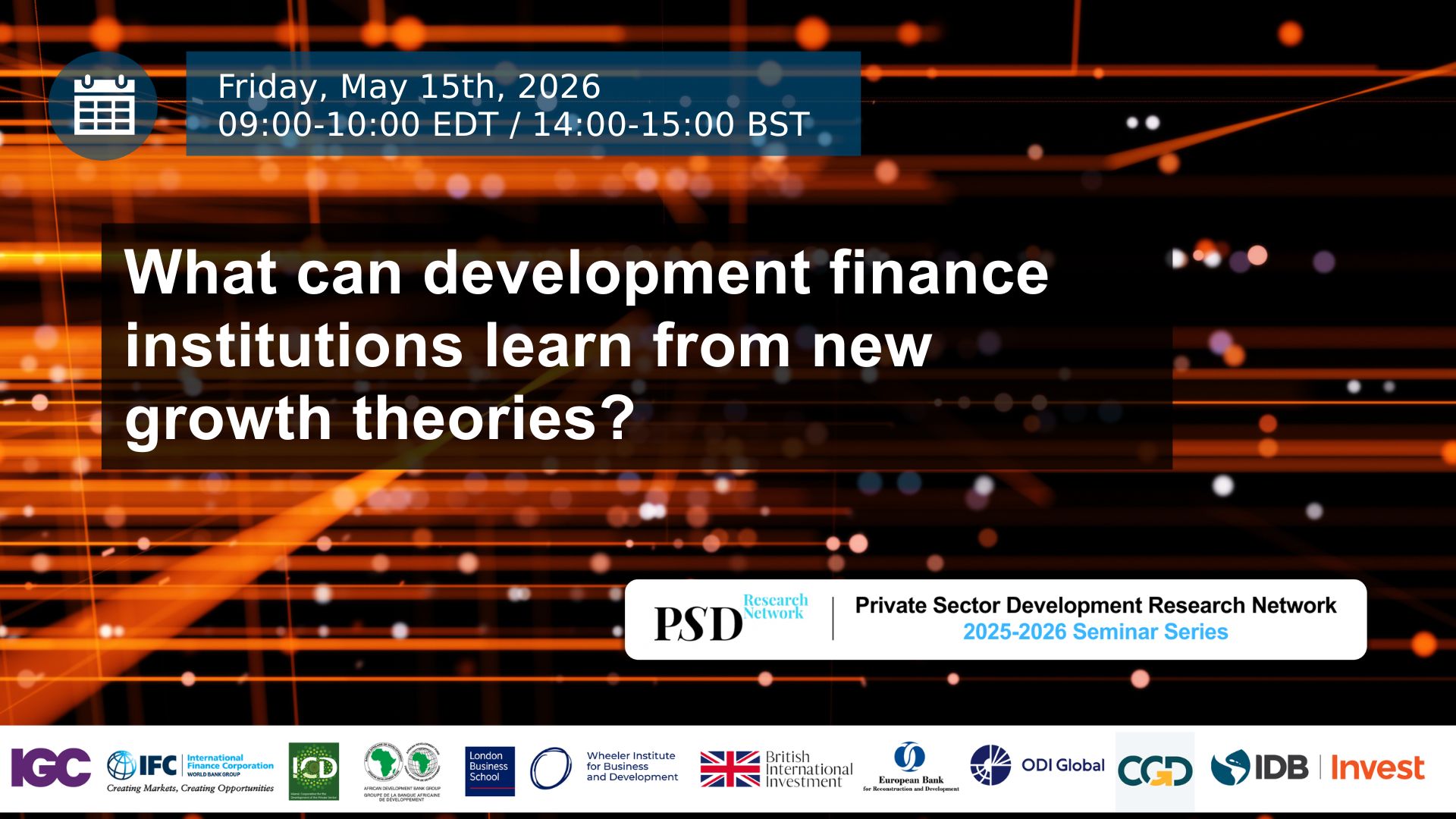
What can development finance institutions learn from new growth theories?
Watch the recording here:
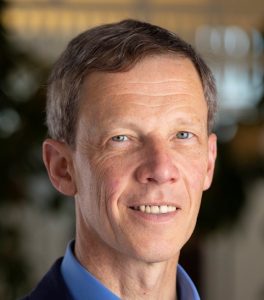
Presented by Neil Gregory
ODI
Organized by the Private Sector Development Research Network
hosted by ODI
Friday, May 15th from 9-10am EDT
Click here to join virtually the day of the seminar
ABOUT THE SEMINAR
Development finance institutions (DFIs) were originally created so solve a capital scarcity problem for private enterprise in low and middle income countries. Since then, new growth theories have de-emphasised the importance of capital accumulation in growth processes, and emphasized the importance of dynamic market creation and destruction, knowledge, standards, clusters and path dependency. This seminar will summarize relevant insights from endogeneous growth theories and draw out the implications for DFI strategies.
The fundamental insight is that it is not the quantity of capital that DFIs provide that matters, but how their actions help to change markets. This shifts the role of DFIs from financing investible opportunities in markets as they are today, to fostering market development to create investible opportunities tomorrow (which may or may not require DFI financing). It changes the way that DFIs assess markets, towards a focus on standards, contestability, entry and exit and path dependency. It changes the way DFIs select investments, towards a focus on clusters of investments, favoring urban, FDI and trade-intensive projects, favoring challengers over incumbents, and taking more of a venture capital approach of backing good firms rather than good projects, while taking lower probability bets with higher payoffs. It changes the way DFIs approach blended finance, towards a focus on generating knowledge rather than correcting market failures.
Find the research paper here.
ABOUT THE SPEAKER
Neil Gregory (ODI)
Neil Gregory is a Senior Advisor to the Centre for Private Finance in Development at ODI Global. He advises development finance institutions and governments on private capital mobilization and impact investing. He previously held a range of senior research, strategy and operational roles at IFC and the World Bank. He holds Master’s degrees in Economics from Cambridge and Oxford Universities, and an MBA from Georgetown University.